
POOL CARE / A PATRIOT HOMEOWNER GUIDE
What should weekly pool maintenance include?
Understand cleaning, water testing, filtration checks and owner tasks between visits. Compare weekly pool-care scope and ask what is included in a plan.
Start with the answer
Weekly pool maintenance should have a defined scope: physical cleaning, water testing and follow-through, checks on the operating system, and a clear handoff to the owner. What is included in a specific service agreement must be confirmed. A weekly visit does not remove the need to watch the pool between visits.
If you are comparing pool maintenance cost, compare the tasks and exceptions along with the price. Use this guide to ask about weekly pool care and decide which responsibilities you want to hand over.
What to keep in mind
- Skimming, brushing and vacuuming address different kinds of physical cleaning.
- Record test results and the response, not just that the water was tested.
- Compare included chemicals, filter care and extra visits in writing.
- Agree which checks remain yours between weekly visits.
Start with a record of the pool condition
A visit is more useful when there is a record of what was observed and done. Ask how the service provider reports the water condition, debris, test results and any equipment concern. Notes should help distinguish an ordinary visit from a problem that needs additional assessment.
Tell the provider about changes since the last visit: unusual swim use, rain, a water top-up, products added or a change in equipment behavior. Keep previous reports where you can find them. A date and a short observation can make a later discussion more focused than trying to remember when the water first looked different.
This is a suggested way to assess a service plan, not a claim that every task below is included in Patriot’s contract. Ask what the proposed service covers for your pool and address, how concerns will be reported and what happens when work falls outside the routine visit.
| Visit element | Useful record | Scope question |
|---|---|---|
| Physical condition | Clarity, debris and visible concerns | What changes trigger a separate assessment? |
| Cleaning | Tasks completed and areas needing follow-up | Which cleaning tasks are included? |
| Water testing | Results and any action taken | Which parameters and products are covered? |
| Operating system | Observations and reported issues | What is a check, and what requires diagnosis? |
| Owner handoff | Next checks and unresolved questions | How and when will I receive the report? |
Skimming, brushing and vacuuming do different jobs
Skimming removes floating debris; brushing addresses appropriate surfaces; vacuuming collects settled material with a suitable tool or cleaner. Ask how those tasks are performed for your pool shape and finish. One should not quietly be treated as a complete substitute for the others.
Discuss the areas that collect debris, including steps, shelves, corners and the surrounding planting. Confirm which tools suit the finish and how difficult areas will be reached. If you plan to do part of the work yourself, the maintenance-tool guide gives a place to begin a compatibility conversation.
If a robot is part of your routine, ask how its coverage fits the manual tasks. A debris cleaner is not a water test or an equipment inspection. The robotic-cleaner article helps separate the work a selected machine can do from the rest of ownership. Ask about the actual model rather than assuming every robot reaches every feature.
Water testing needs interpretation and follow-through
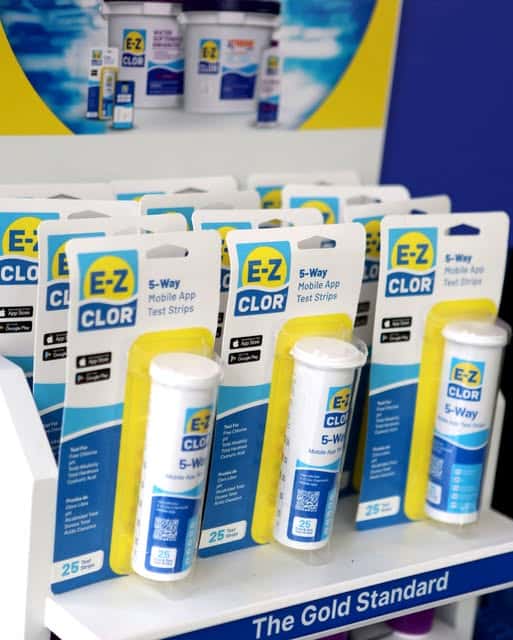
Testing should lead to an understandable record and an appropriate next step. Ask which parameters are measured, how results are communicated and what products or adjustments are included. Bring the recent chemical history into the discussion rather than treating each result in isolation.
CDC’s home guidance recommends disinfectant and pH checks at least twice daily, more frequently during heavy use. A weekly appointment is therefore not the whole monitoring routine. Discuss who performs the checks between visits and how an unexpected result is handled.
The water-testing visit guide explains the conditional pool and spa references. Use that context to ask about your actual system rather than applying a remembered number without knowing which water type it concerns. Discuss the complete results through the water-testing and balancing service, and confirm the agreed follow-up rather than assuming that testing alone resolves a concern.
Check circulation and filtration during the visit
Ask what observations are made while the system operates. A change in flow, a leak, an unusual sound or a change in a gauge reading is useful to record. It is an observation to investigate, not proof of a specific failed component.
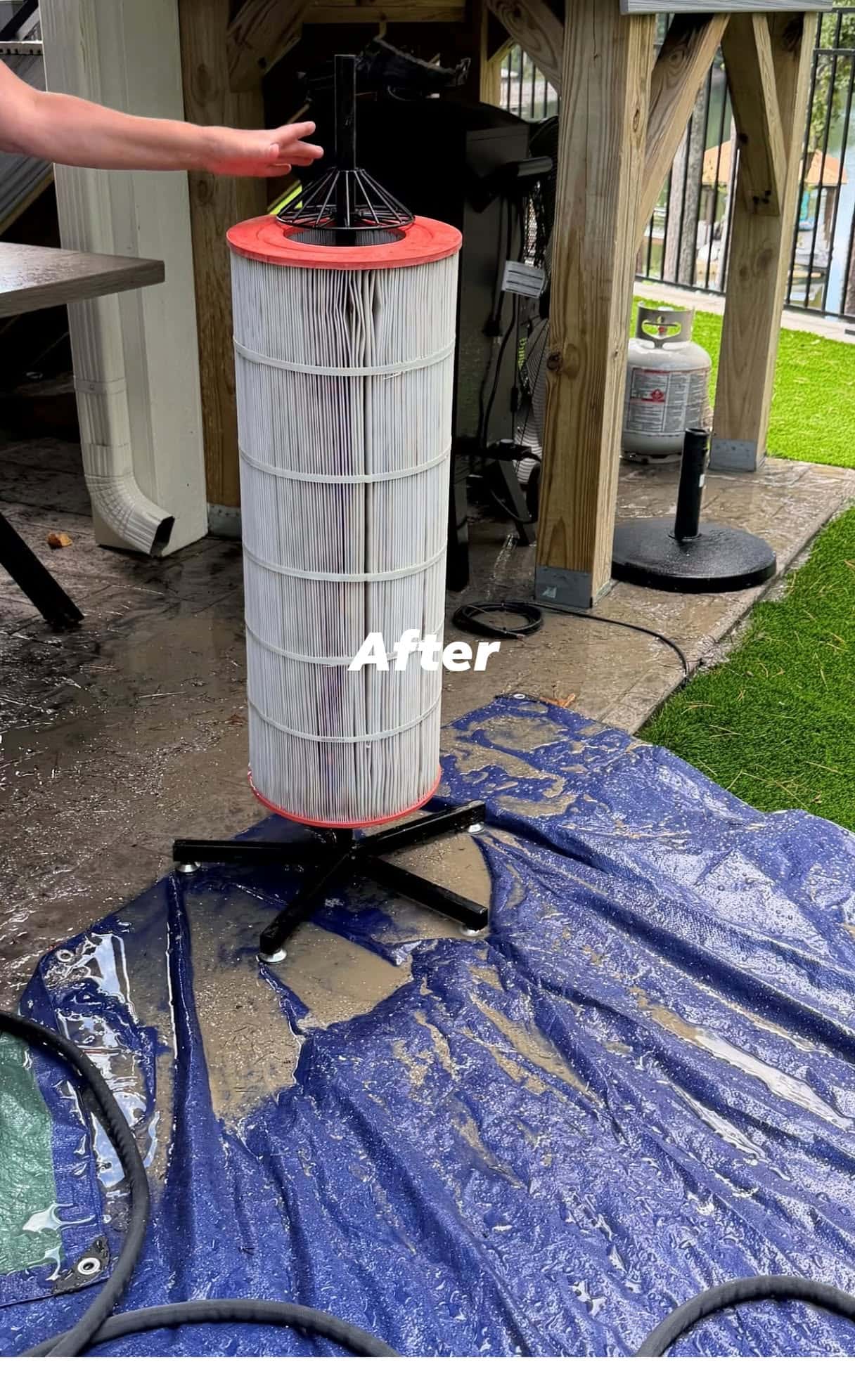
Filter care should be described separately. Ask whether cleaning is included, how its timing is determined and what would be charged or arranged outside the ordinary visit. The filter-cleaning guide explains why the clean operating baseline and the actual model’s instructions matter. Do not treat one generic pressure value as the trigger for every filter.
The filter photograph below shows a care-related item shared by the business. It does not prove that the filter meets a flow specification or that a particular maintenance interval applies. If the system needs assessment or repair, ask how that work is distinguished from routine physical cleaning.
Know what to check between service visits
Agree on the owner’s checks while the plan is being set up. Ask about water testing, obvious changes in clarity, debris and the operating system. Keep the instructions suitable for the equipment and products you own. The provider should explain how you report a problem and when it needs a different type of service.
A storm, unusual use or a period away from home can change the care conversation. Tell the provider what happened and what you observe; ask whether an extra visit or assessment is appropriate. Do not repeat chemical additions simply because the water has not changed as quickly as expected. The green-water guide explains what information helps a recovery assessment.
Before a trip, ask how your planned monitoring will continue. If you are taking over a task from the provider, confirm the instructions and product compatibility. The water-care research guide is a sourced reference; it is not a personalized chemical treatment plan or a declaration that a pool is suitable for swimming.
Agree on inclusions, exceptions and communication
Compare the service plan as a written division of work. Record frequency, cleaning tasks, tests, chemical arrangements, filter service, reporting and how additional work is authorized. Ask how cancellations, access problems, severe weather or a pool needing recovery affect the ordinary visit.
Ask for a clear distinction between maintenance and diagnosis. If equipment behaves unexpectedly, you need to know whether the visit includes an observation, further testing or a separate repair proposal. The same applies to a pool that needs recovery before routine care can resume.
Patriot Pools & Spas is veteran owned and based in Cornelius. Recurring service fit is reviewed by address and route, so provide your location and describe the pool’s current condition. A pool-care inquiry can begin with the tasks you want help with, not a guess at the entire service specification.
- Which cleaning and testing tasks are included?
- Which chemicals, filter services or extra visits are separate?
- What do I check between visits?
- How are test results and concerns reported?
- How is additional work assessed and authorized?
WHAT HOMEOWNERS ASK
A few more useful answers.
How much does weekly pool maintenance cost?
A useful price requires the pool, address, current condition and proposed service scope. Ask whether chemicals, filter cleaning, recovery visits and repairs are included or charged separately. This guide does not supply a current local price.
Do I still need to test the water if I pay for weekly care?
Yes. Establish a monitoring routine that covers the time between visits. Agree who does the checks, how results are recorded and what instructions apply when something changes. The service plan should identify those responsibilities clearly.
Is opening or closing the pool included in weekly service?
Confirm that in the agreement. Seasonal work, recovery, repairs and ordinary weekly tasks can have different scopes. Ask what arrangements apply if you stop or restart recurring care.
What should I tell a new maintenance provider?
Share the property location, pool and equipment information, recent test results, chemical history and current concerns. Explain which work you want to hand over and which tasks you expect to keep doing yourself.
MAKE YOUR NEXT CONVERSATION COUNT
Choose a pool-care routine you understand
Share your location, current pool condition and the tasks you want help with. The team can review service fit and discuss the next step.
Discuss your pool care