
POOL CARE / A PATRIOT HOMEOWNER GUIDE
Why is my pool green after shocking it?
A green pool after shock needs current results and a filtration check. Learn what to record before adding chemicals or arranging recovery.
Start with the answer
If your pool is still green after shocking it, the next useful step is a test and a review of what changed. Another bag or bottle is not a diagnosis. The color may be associated with algae, dissolved metals or more than one water and equipment issue.
The word “shock” also leaves out essential information: the product, active ingredient, concentration, amount, pool volume and time since application. Two owners can say they shocked a pool and have done quite different things. Bring those details into the conversation before choosing a second treatment.
This guide helps you build a clearer picture for green-pool recovery. It does not supply a chemical dose or decide whether the pool is ready for swimming.
What to keep in mind
- Cloudy green water and transparent colored water are different observations; appearance alone cannot confirm the cause.
- Record the exact product and current test results before repeating a treatment.
- Water chemistry, debris removal and filtration need attention together.
- Photos and a short timeline make a recovery inquiry more useful than “the shock did not work.”
A green color does not identify the whole problem
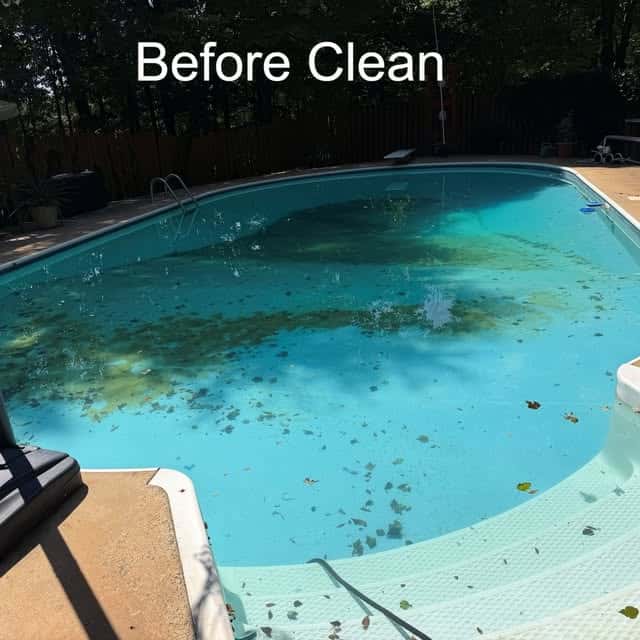
First describe what you can see without turning the description into a conclusion. Is the water green and cloudy, or colored but transparent? Can you see the bottom? Is material settled on the floor, floating on the surface or attached to the walls? Has the color changed suddenly after filling, treatment or a weather event?
BAYROL’s water-problem guide treats green cloudy water as a possible algae problem, while transparent brown or green water can be associated with oxidized iron. These manufacturer examples show why the same broad color description can lead to different lines of investigation. They do not diagnose your pool from a photograph.
A phone photo taken in shade may make water look different from the way it looks at midday. Send a wider view and a closer image of the condition, with a note about when they were taken. Include debris and staining if visible. The purpose is to preserve an observation that the person assessing the pool can compare with the water results.
Check test results before adding more products
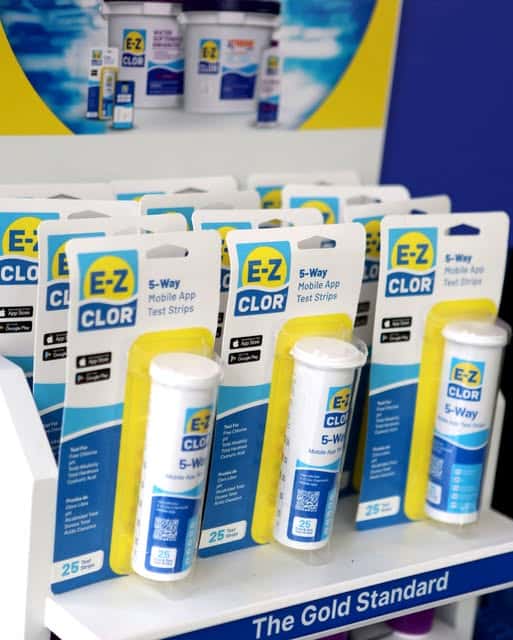
Ask what was measured, when the sample was taken and which method was used. A result from before the treatment cannot describe the water after it. Free chlorine, pH and stabilizer information answer different questions, and the product history helps interpret them. If a reading seems inconsistent with what was just added, pause before acting on it.
CDC warns that chlorine above 10 ppm can distort a DPD result toward a falsely low reading. This interference threshold is not a treatment target or swimming limit. It is also not a reason to assume every low result is false.
Keep the package or take a readable label photo, including the active ingredient and concentration. Write down the quantity added, the time and your best-supported pool volume. If someone else treated the pool, ask them for that information. “The blue bottle” or “two scoops” is difficult to use because container sizes and products differ.
For help organizing the water results, see what to bring for a Cornelius water-testing visit. A repeatable record is useful whether you handle routine care or ask for a service assessment.
- Current report: measurements, units, method and sample time.
- Treatment record: exact product, quantity and application time.
- Pool details: volume if known, finish and sanitation system.
- Recent changes: refill, heavy use, rain or interrupted circulation.
Look at circulation, filtration and debris
Chemical treatment does not remove leaves or explain why water is not moving normally. Tell the service team whether the pump is operating as it usually does, whether the filter pressure changed and when the filter was last serviced. Avoid guessing a failed part from one symptom.
Think of this as a connected assessment: what is in the water, what is on the surfaces, and what is happening at the equipment. Brushing and debris removal serve a different purpose from checking sanitizer. Filter care serves a different purpose again. Skipping one because another was completed can leave the original concern unresolved.
If the gauge reading is unusual, compare it with a recorded clean-filter baseline and the model instructions. An arbitrary internet pressure target is not a useful substitute. The filter-cleaning guide explains what information to collect without opening the pressure vessel.
Also report practical limits. A cleaner may not be reaching a bench, or access to the equipment may be blocked. These are useful details for planning a visit. You do not need to remove covers, disconnect wiring or dismantle a filter to submit an initial inquiry.
A clearer pool still needs verified conditions
A change in color is an observation, not a complete record of the pool’s condition. Keep the treatment timeline and arrange the recommended follow-up testing. Product labels set application and re-entry instructions for the specific material used; an online article cannot replace those instructions for an unknown pool.
Do not use a completed-project image or somebody else’s clearance time as a promise for your water. The starting condition, equipment, recent treatments and test results are different. A helpful recovery recommendation should explain the findings, the work being proposed and how progress will be checked.
CDC chemical-safety guidance also calls for separating incompatible chemicals and following product instructions. Do not mix products or combine several treatments simply because they are marketed for green water. Preserve the labels and ask about the order and compatibility of any proposed treatment.
The water-care research guide brings together the original sources and their limits. Its guidance is a reference for the discussion, not a certificate that an individual pool is safe.
What information helps a recovery assessment?
A short timeline often does more work than a long message. Start with the last day the pool looked normal. Add the day the color changed, any known interruption in the equipment, and every treatment since then. Attach the most recent test rather than copying only the one number that seems relevant.
Include your city and ZIP code so route availability can be checked. If the equipment has a visible model label or an error message, include a clear photo from an accessible position. State what you know and mark what you do not know. An estimate presented honestly is more useful than a precise-looking number guessed from memory.
Ask how the initial assessment, physical cleaning, filter work and follow-up are handled. A recovery request is not automatically a recurring maintenance agreement. If you would also like help keeping a routine after recovery, describe that as a second need so the scope can be discussed clearly.
| Record | Useful detail |
|---|---|
| Last normal condition | Date and what looked different afterward. |
| Changes | Refill, weather, use or equipment interruption. |
| Products added | Label, quantity and time for each application. |
| Testing | Full report and sample time, including uncertain results. |
| Equipment | Model, visible message, pressure history and last service. |
When to stop guessing and arrange a visit
Arrange an assessment when you cannot explain the current results, the condition keeps returning, or the equipment is not operating normally. Repeatedly adding a product without a reliable reading makes the history harder to interpret and does not establish the underlying cause.
A useful next step ends with a defined plan: which condition is being addressed, what work is included, what still needs checking and what information you will receive afterward. If you are comparing recovery providers, compare those details along with the quoted scope.
Once the immediate concern has been assessed, the weekly maintenance checklist can help you decide which recurring tasks you want to keep and which you want help with. A routine should suit the pool you own and the work you can maintain.
WHAT HOMEOWNERS ASK
A few more useful answers.
Can clear green water still need a different approach from cloudy green water?
Yes. BAYROL gives different possible explanations for cloudy green water and transparent colored water. Describe both color and clarity, then use current testing and the treatment history to investigate. Neither description confirms the cause by itself.
Should I add another shock treatment if the chlorine test reads low?
Do not choose a repeat treatment from that number alone. Confirm the test method, sample time and product history. A qualified interpretation can distinguish an unreliable test from a genuine low result. The testing section above explains the specific interference caveat.
How long will a green-pool recovery take?
The information on this page cannot establish a clearance time. Ask after the starting condition, test results and equipment have been assessed. Request the proposed work and follow-up process rather than relying on a fixed promise that does not account for your pool.
Can I send photos before arranging service?
Yes, photos are useful for an inquiry alongside current results, labels and a short timeline. Include your property city and ZIP code for availability review. A photograph helps communicate the condition but cannot replace testing or an equipment assessment.
MAKE YOUR NEXT CONVERSATION COUNT
Start with the condition, not another bottle
Send your location, current results, treatment history and photos. Patriot can review the recovery request and the next assessment step.
Discuss green-pool recovery