
EQUIPMENT & SUPPLIES / A PATRIOT HOMEOWNER GUIDE
When does a pool filter need cleaning?
Use a clean-pressure baseline and the exact model to decide when to ask about pool filter cleaning. Learn which changes need an assessment.
Start with the answer
A pool filter’s pressure reading is most useful when you know its clean starting pressure. “The gauge says 20” is incomplete. The change from a documented baseline, the filter model and the operating setting tell a more useful story than one number compared with an internet rule.
Cleaning schedules also depend on the equipment and what the pool has collected. Cartridge, sand and diatomaceous-earth filters do not use the same service routine. Start with the model’s instructions and the last service record.
This guide explains what to record for pool filter cleaning. It does not walk you through opening a pressurized filter or prescribe one pressure limit for every pool.
What to keep in mind
- Record the clean-filter starting pressure with the pump’s operating setting and date.
- Use the exact model’s cleaning trigger; 10 psi above baseline is not a universal rule.
- Pressure, flow symptoms and gauge behavior belong in the same assessment.
- If cleaning does not restore normal operation, ask for a diagnosis before ordering parts.
Record the clean-filter pressure first
Ask the person servicing the filter to record the starting pressure after service, together with the date and normal pump setting. Keep that note with the equipment model. A baseline should describe a known operating condition, so future readings can be compared sensibly.
If your variable-speed pump runs different tasks at different speeds, note which setting was active when you read the gauge. A reading during one operating condition should not be casually compared with a reading during another. Mention a recent equipment or valve-setting change when arranging service.
When there is no record, tell the technician that the baseline is unknown. Do not invent a normal pressure from a neighbor’s pool or the gauge’s printed scale. The assessment can establish what to record after the next appropriate service.
A simple photo can preserve the number and date. Take it from a position you can access without disturbing the equipment. The goal is to report the condition, not to turn record keeping into a filter-opening task.
- Exact filter manufacturer and model.
- Date of service and recorded clean starting pressure.
- Pump setting or speed during the reading, if known.
- Current reading and the date it changed.
Pressure is a clue, not a diagnosis by itself
A rising gauge reading may prompt filter care under the model’s instructions, but the whole description still matters. Report a change in water flow, an unusual pump sound, a visible leak or a reading that appears stuck. One clue does not explain every possible system problem.
If the reading changes sharply, avoid describing it as ordinary dirt loading without an assessment. The gauge, filter and wider system may need attention. State what you observed and what changed recently, including a repair, new equipment or a different operating program.
Pentair’s filter-safety support warns that trapped air can compress inside a filter and cause separation of the lid from its base. That is why an initial inquiry should focus on accessible labels and observations. This article does not provide a shortcut for opening a filter.
Pressure-vessel service has model-specific isolation and pressure-relief requirements. If those are not familiar work for you, arrange qualified help. A low reading by itself does not establish that the assembly is ready to open.
Cartridge, sand and DE filters need different care
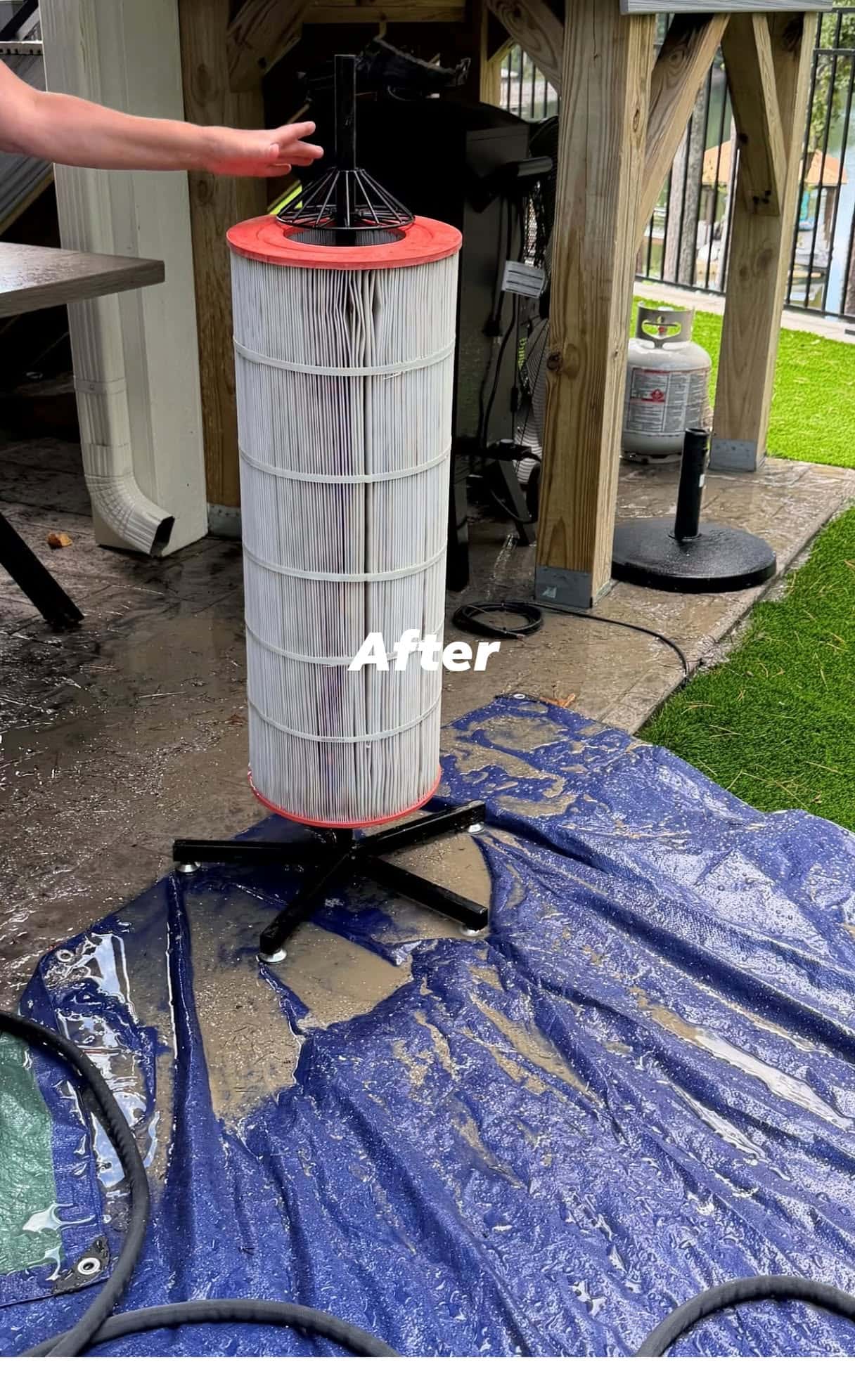
Identify the filter type before asking for a service method. A cartridge element, sand media and diatomaceous-earth system have different components and instructions. A video showing one type should not be treated as a procedure for another.
EPA WaterSense residential guidance explains that cartridge filters do not require backwashing. That difference does not make them maintenance free. Their elements still need care under the manufacturer’s instructions, and the proposed service should account for the exact assembly.
For sand and DE filters, ask which manufacturer procedure applies and how the service is handled. Discuss water-discharge requirements where relevant rather than directing waste wherever it is convenient. If the system has changed since the manual was supplied, the current equipment should be identified again.
Before approving the work, ask whether the quote includes routine cleaning, an inspection of parts and any materials particular to the filter type. A price labeled “filter service” can cover a different scope from the one you imagined. Keep repair or replacement as a separate decision when damaged parts are found.
Use your model’s instructions for the trigger
The table gives two named Pentair examples, not a universal pool-filter rule. Both relate a pressure increase to the starting pressure. They do not specify the same absolute pressure for all installations.
Pentair’s official Clean & Clear product support identifies 10 psi above starting pressure for Clean & Clear Plus and an 8-10 psi increase for Clean & Clear RP. Confirm your model and current manual before applying either example. Similar product names are not sufficient evidence that the instructions match.
The useful question is “What does my manufacturer specify, and what was my recorded baseline?” If your filter has a different trigger, use that instruction. If the label is unreadable or the manual is missing, a label photo and the installed configuration can start a service conversation.
The equipment-repair research guide preserves these examples and their original sources. It is a reference for comparing instructions, not an expanded list of filters the business promises to support.
| Named filter | Published cleaning signal | Limit |
|---|---|---|
| Clean & Clear Plus | 10 psi above its starting pressure | Applies to the identified product guidance, not every filter. |
| Clean & Clear RP | 8-10 psi above starting pressure | Confirm the exact model and manual. |
When cleaning does not solve the problem
If the system still behaves unusually after service, ask what was found and what changed. Was a new baseline recorded? Were damaged components observed? Did the original flow or leakage concern remain? Do not assume repeated cleaning will address a component failure.
Pentair advises replacing worn or damaged filter-system parts. The part still needs to match the installed model and revision. A similar-looking ring, gauge or valve is not enough to establish compatibility, and buying a part does not establish why it failed.
The filter repair and replacement service is the more appropriate conversation when the issue extends beyond routine cleaning. If you already have a diagnosed part requirement, the equipment-parts guide explains what to bring to the store.
Ask the assessment to distinguish cleaning, a repair to the assembly and full replacement. Each has a different purpose and scope. A clear recommendation should explain the finding and any remaining uncertainty rather than presenting replacement as the default answer to an unknown pressure issue.
What to send before a filter service visit
Put your current model, gauge photo and last service date in one message. Add the recorded baseline if you have it and describe the symptom that prompted the inquiry. Include the property city and ZIP code for service-availability review.
For a recurring plan, decide whether routine filter cleaning is included and how often the model is assessed. The weekly pool-maintenance checklist helps separate routine tasks, owner checks and additional work. Do not infer that every service visit includes every possible filter procedure.
If your original concern is green or cloudy water, include the current water report too. Chemistry, debris and filtration may all need attention. The green-pool guide shows how to build that timeline without guessing another chemical treatment.
WHAT HOMEOWNERS ASK
A few more useful answers.
Is 20 psi too high for a pool filter?
An absolute number is not enough to answer. Identify the filter, the recorded clean starting pressure and the operating condition. Compare the change with the exact model’s instructions, and ask for assessment if the reading or system behavior is abnormal.
Should every filter be cleaned on the same monthly schedule?
No single schedule on this page applies to every filter. Use the manufacturer instructions, recorded condition and service plan. Pool use, debris and operating history are useful details when deciding how care should be handled.
Does a cartridge filter need backwashing?
EPA WaterSense states that cartridge filters do not require backwashing. The cartridge still needs cleaning under its product instructions. Do not transfer a sand or DE maintenance procedure to a cartridge assembly.
Can a new gauge solve the pressure problem?
Only if assessment establishes that the gauge is the relevant fault and the replacement is compatible. A gauge change cannot be assumed to correct every flow or filter concern. Send the symptom history before buying the most visible part.
MAKE YOUR NEXT CONVERSATION COUNT
Make filter service start with the right information
Send your model, pressure history, last service date and property location. Patriot can review whether the request concerns cleaning, diagnosis or repair.
Discuss filter service