
EQUIPMENT & SUPPLIES / A PATRIOT HOMEOWNER GUIDE
Pool pump repair or replacement: what decides it?
Compare a diagnosed pump repair with a matched replacement. Understand full scope, system fit and efficiency claims before choosing.
Start with the answer
The repair-or-replace decision starts with the fault, the installed system and the scope of each option. The age of the pump or the price of a new unit alone cannot settle it. A repair that addresses a defined failure and a replacement matched to the pool are two different proposals worth comparing clearly.
If you are searching for pool pump replacement cost, first establish what the price includes. The unit is only one part of the job. Installation changes, controls, parts availability and the equipment that remains can affect the decision.
This guide helps you prepare for pump repair or replacement without choosing a failed component from a noise or a product photo.
What to keep in mind
- Describe the symptom and gather the model before selecting a repair or replacement.
- Compare a defined repair scope with a specified replacement, including installation and controls.
- Variable speed is useful when the operating program is matched to the pool’s actual tasks.
- An efficiency-category claim is not a guaranteed reduction in your own electricity bill.
Describe the symptom before choosing the fix
“The pump will not start” is a different description from “it starts, then stops” or “it sounds different while running.” Begin with what happened, when it began and whether the behavior is constant or intermittent. That gives the assessment somewhere to start without assuming the motor, controller or another component has failed.
Include visible error messages exactly as they appear. A clear photo is better than a remembered approximation. If the symptom appeared after a cleaning visit, power interruption, equipment change or different operating program, add that sequence to the inquiry. The timing is relevant even if it does not establish the cause.
Do not dismantle a pump or open electrical compartments to make the inquiry more complete. An accessible equipment label, visible controls and an ordinary description are useful first inputs. Wiring checks and component testing belong in the appropriate qualified assessment.
If you cannot tell which equipment is making a sound or causing the problem, ask for equipment diagnostics. Choosing the service by the uncertainty is more useful than committing to a replacement part before the source has been identified.
- Does it fail to start, stop during use or behave differently while running?
- What does the display say, if there is a visible message?
- When did it start, and what happened immediately beforehand?
- What changed in the equipment or operating program?
Check the pump’s place in the whole system
A replacement belongs to a system, not just a category on a shelf. The proposed unit needs to be considered alongside the filter, heater, sanitation equipment, pool features and controls that remain. Ask the assessor to identify those components and explain any compatibility issue.
A spa, water feature or heater may create a different operating task from ordinary circulation. The quote should explain how those tasks will be handled rather than treating the largest feature list as the best match. If you expect to change the backyard equipment soon, mention that before approving a replacement.
Keep the controls in the conversation. Will the existing automation operate the proposed pump? What information will you need to manage its schedule? If additional installation or programming is required, have that scope identified before comparing the total with a repair.
The equipment-repair research guide organizes model-qualified evidence for this discussion. It does not establish that every brand or configuration is supported by the business. Confirm the exact system during the inquiry.
Repair scope, parts and condition need separate answers
A useful repair proposal states what was found, which component is being addressed and what the work is intended to restore. Ask what remains outside the scope and whether a related condition still needs investigation. A quotation that names a part without explaining the finding is harder to compare.
Parts availability matters separately from the fault. A repair can be reasonable in principle but difficult to complete if the correct component is unavailable. Confirm compatibility with the actual model and revision, rather than asking whether a similar-looking component can be made to fit.
A replacement proposal should name the unit and the installation work. Ask what equipment remains, which connections or controls change, and how operation will be handed over. Keep any manufacturer warranty terms distinct from the service-provider terms so the comparison is clear.
If the question is only about a confirmed part, use the Cornelius equipment-parts service and bring the label information. If the cause is uncertain, a part purchase is not the same as a diagnosis.
| Decision point | Repair proposal | Replacement proposal |
|---|---|---|
| Finding | Which fault was diagnosed? | Why is replacement being considered? |
| Scope | Which parts and labor are included? | Which unit, installation and controls are included? |
| Compatibility | Does the repair part match this model? | How does the unit work with the equipment that stays? |
| Availability | What is the status of the exact part? | What is the status of the specified unit? |
| Handover | What function will be checked afterward? | How will the new operating program be explained? |
What to consider about a variable-speed replacement
Variable speed deserves a discussion about the pool’s operating tasks. Ask which settings are proposed for ordinary circulation and for any feature that needs a different flow condition. Do not take a low-speed example from another installation and assume it meets your heater or sanitation-equipment requirements.
ENERGY STAR’s pool-pump guidance gives a current category comparison of 20% less energy for certified inground pumps than standard pumps. That comparison is not a measured saving against your existing unit. Your own result depends on the equipment, operating program and conditions; it is not a promise about a future electricity bill.
For a fair comparison, ask what information supports the proposed operating program and which requirements have to be maintained. If an estimate is offered, ask for its assumptions, including hours, settings and electricity price. Keep an estimate separate from a measurement after installation.
A variable-speed pump should come with a practical handover. You need to understand the everyday program, which tasks use different settings and what changes to report. A feature is useful when it fits the way your system is operated.
Gather labels, errors and service history
Collect the manufacturer, complete model and any known part information from accessible labels or paperwork. Photograph the label clearly enough to read. If you have a manual, receipt or earlier service report, include it rather than assuming the current configuration is identical to the original installation.
Write down the last time the pump behaved normally and the first time you noticed the symptom. Note whether the issue appears under one operating task or all of them. Mark unknowns honestly. You do not need a complete technical diagnosis to submit a useful request.
Include the property city and ZIP code, the pool or spa setup and the help you want: assessment, a diagnosed repair or a replacement discussion. Service availability and parts support can then be reviewed against the actual location and system.
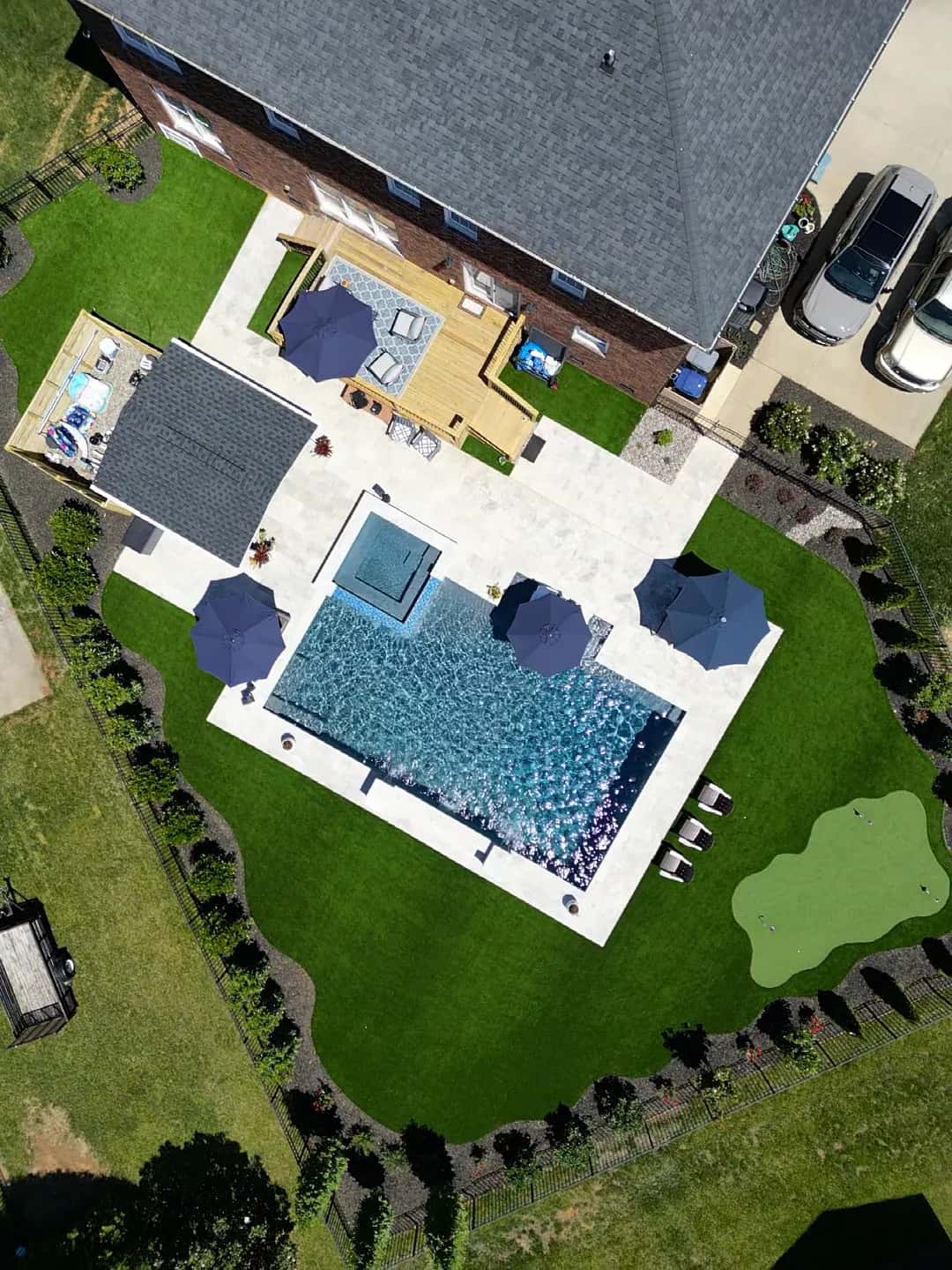
For a property with a pool, spa and outdoor features, a wider equipment photo can explain the arrangement. The original project photo below illustrates how several backyard uses can sit together; it does not document a fault, a specific pump or a repair.
Compare a diagnosed repair with a specified replacement
Ask for the two options in a form you can compare. “Repair the diagnosed fault with these parts and checks” is meaningful. “Install this unit with these changes and this handover” is meaningful. A bare repair number beside a bare retail pump price is an incomplete comparison.
Costs can then be discussed against the real scope rather than a national average for a different installation. This article does not invent a current local repair price or replacement cost. A useful quotation should identify any excluded work and uncertainties that still need resolving.
After the equipment question is addressed, keep the service record with your routine-care notes. The weekly maintenance checklist can help you decide what to observe between visits and how changes will be communicated.
WHAT HOMEOWNERS ASK
A few more useful answers.
Does an older pump always need replacing?
Age is one piece of context. The diagnosed fault, overall condition, parts availability, system fit and full repair scope still matter. Ask the assessment to explain why the proposed option makes sense for the installed equipment.
Is a louder pump proof the motor has failed?
No. A changed sound is an observation to report, not a confirmed component diagnosis. Describe when it occurs, what else changed and any display message. Avoid ordering a motor solely from the sound.
Why is an installed replacement quote different from a retail price?
An installed scope can include connections, controls, commissioning and other work needed for the specified system. Ask the quote to identify those items. A product price alone does not describe the complete job.
Can I compare energy savings before choosing?
Ask for the assumptions behind any estimate and the exact equipment comparison. A certification-category statement is different from measured savings at your property. Keep operating requirements and the future program in the discussion.
MAKE YOUR NEXT CONVERSATION COUNT
Get the repair decision defined
Share the pump label, symptom, service history and your property location. Patriot can review the diagnostic request and discuss a repair or matched replacement scope.
Discuss your pump problem