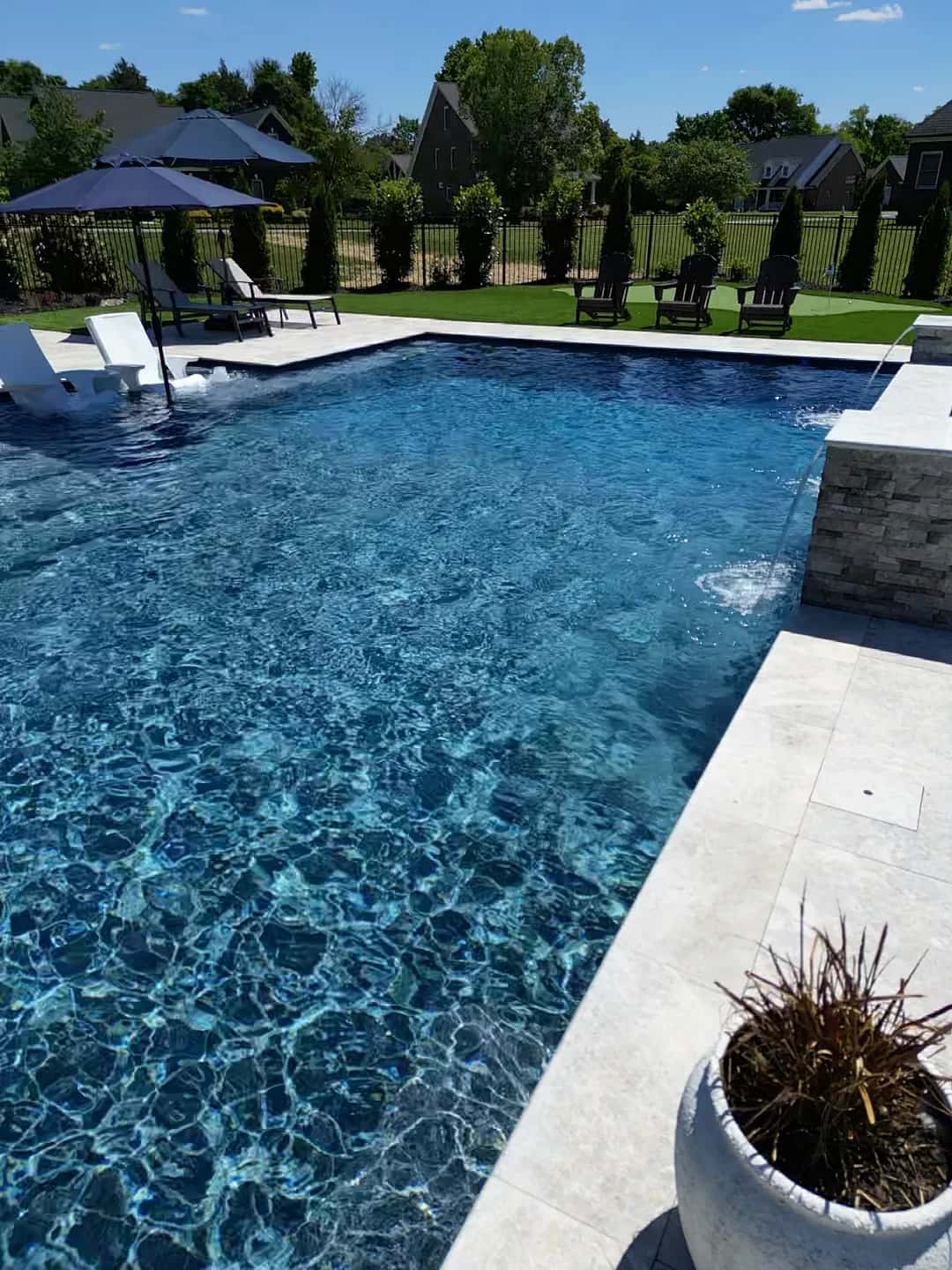
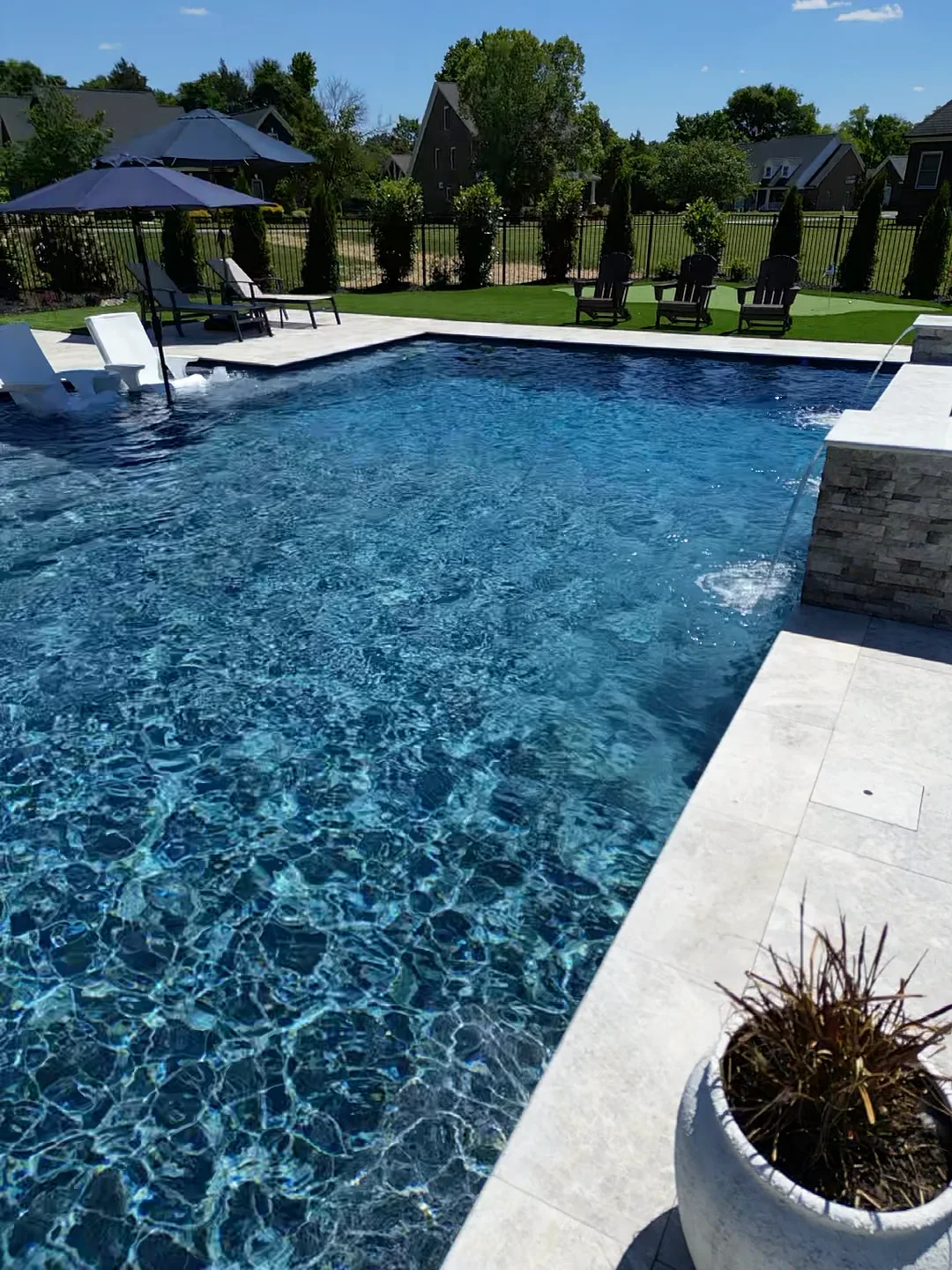
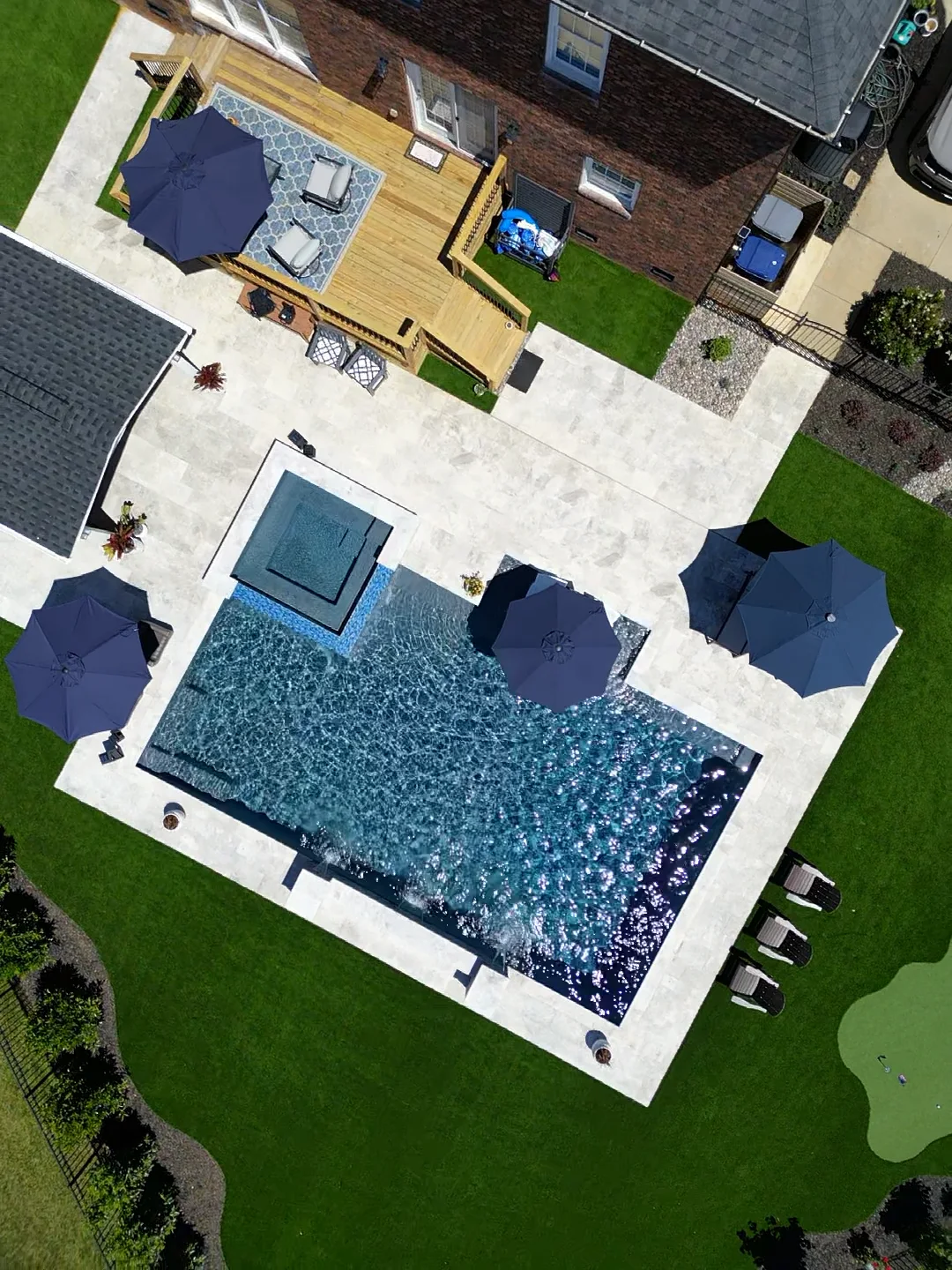
A spa’s outside dimensions do not tell you how comfortable its seats will feel. Discuss seat layout, entry and the number of people who will actually use it together.
01
Attached, raised or visually quiet?
A spa can sit within the pool composition or become its own focal point. A raised edge changes the view, the route into the water and the relationship to the surrounding deck. A quieter design may sit closer to the level of the pool. Neither approach is automatically right for your home.
Look at it from the house as well as from the pool. If the spa will be your evening retreat, the walk to it matters. Think about privacy, towels, lighting and where you will sit before and after getting in. These are small details that shape how often you use the finished space.
02
Talk about the experience before counting jets.
The conversation should include seating positions, the feel you want, access and controls. More features on a list do not necessarily make a spa more comfortable. Ask how the proposed layout supports the way you expect to use it, and which choices can be reviewed at the design center.
Heating and circulation need to be planned with the rest of the system. Discuss whether you expect occasional use or frequent use, and whether the pool and spa need different operating conditions. The final equipment design determines what is possible; do not assume every combined system behaves the same way.
03
Include ownership in the design.
Leave room to access equipment and discuss the ongoing water-care routine. A spa still needs maintenance even when it is part of a larger pool project. A cover, operating schedule and selected temperature can also affect the ownership experience; compare the actual products and instructions proposed for your system.
Patriot’s design-center offer brings the spa into the whole backyard conversation. We can discuss it alongside coping, pavers, turf and planting so it feels intentional next to the pool and your home. Scope, specifications and pricing follow the design and site review.
Yes. A combined pool and spa design lets the layout, materials and equipment requirements be discussed together.
Do you sell portable hot tubs?+
This page covers custom spa design. Call the Cornelius store to ask about any current retail spa options.
Should the spa be raised or level with the pool?+
A raised spa can create a focal point and a visible water feature. A level arrangement offers a different relationship to the surrounding deck. Compare the view from the house, seating privacy, entry and movement around both options.
Can a spa be added to a pool I already have?+
It needs a feasibility review. The existing structure, plumbing, equipment and available space determine the options. Bring photos and any plans you have; adding a spa is more involved than finding an empty corner of the deck.
How much does it cost to heat a custom spa?+
The heater, spa volume, starting temperature, weather and how often you use it all matter. Explain whether you want occasional evening use or regular ready-to-use warmth so the equipment conversation reflects your routine.
Does a spa need its own water-care routine?+
Yes. Ask how testing, circulation and treatment work in the proposed configuration. A spa that shares some equipment with a pool still needs an operating and care plan appropriate to its use. Follow the equipment instructions and published hot-tub guidance.