
DESIGN & BUILD / A PATRIOT HOMEOWNER GUIDE
Concrete or pavers for a pool deck?
Compare concrete and pavers for poolside texture, drainage, heat, joints and future access. Learn what to ask about samples and installation scope.
Start with the answer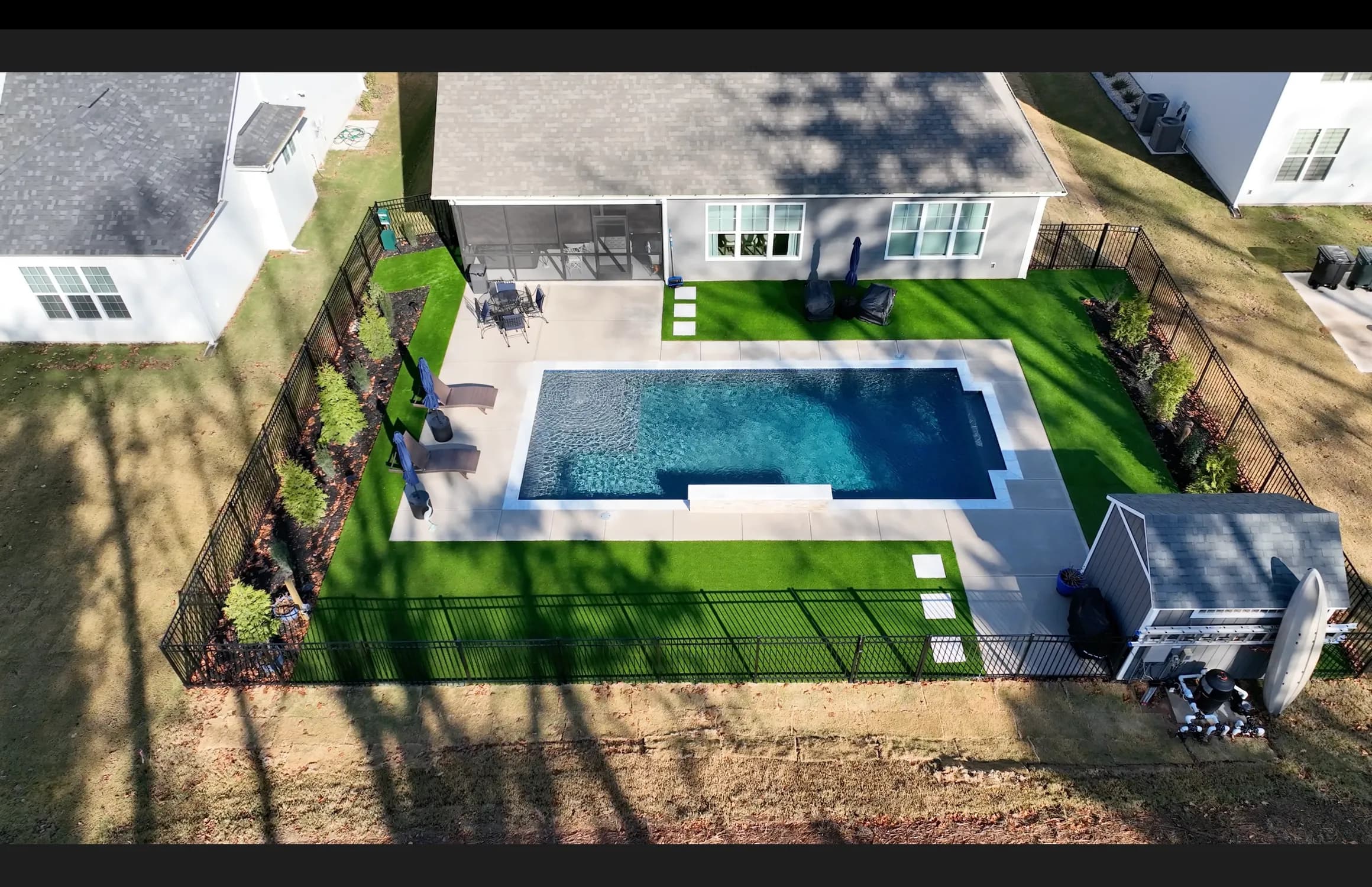
Concrete and pavers can both be options for a pool deck. Choose by comparing the actual finish, drainage design, installation system and future care, rather than deciding that one material name is always the better purchase.
A continuous concrete surface and a surface assembled from individual units offer different design and repair choices. The right comparison uses your site, your selected products and the way you will walk, sit and maintain the area. Bring those questions to a pool decking and paver discussion.
What to keep in mind
- Compare installed systems and selected finishes, not material names alone.
- Ask where water will go before settling the surface layout.
- A cool-surface claim needs product evidence and stated conditions.
- Individual pavers do not automatically create a permeable drainage system.
Compare the finished surface and the system beneath it
Start with what you can specify. For concrete, ask which surface treatment, texture, joints and installation details are proposed. For pavers, ask which unit, base, joint material, edge restraint and laying pattern are proposed. “Concrete” and “pavers” each describe a category with many possible finishes.
Compare a sample of the actual selection with the house exterior, coping and pool finish. Ask what the sample can tell you and what depends on installation or weathering. A small sample does not show the whole deck, and a photo on a screen does not reliably establish its feel.
The decision table below is a list of questions, not a score declaring either system the winner. Your contractor should explain how the specified installation answers each question. Keep the comparison with the complete backyard quote so deck area, steps and drainage do not disappear from the budget.
| Decision | Concrete: ask about | Pavers: ask about |
|---|---|---|
| Finished feel | Specified texture and finish treatment | Selected unit texture and edge profile |
| Water movement | Deck grades, drains and discharge route | Grades, joints, base and discharge route |
| Joints | Joint layout and how it meets the pool | Joint material and perimeter restraint |
| Future work | Repair approach and likely visible differences | Unit availability and reinstatement method |
| Care | Approved cleaning and any treatment requirements | Approved cleaning and joint maintenance |
| Cost comparison | Same area, steps, drainage and site scope | Same area, steps, drainage and site scope |
Where drainage decisions start
Drainage starts with the levels and the destination for water. Ask how rain, roof discharge and water from surrounding ground are handled together. A surface can look flat in a photograph while relying on grades and details that are not visible.
Check where a new deck meets the house, pool coping, beds and other paths. Ask whether drains, outlets, steps and transitions are included in the proposal. If an existing problem is being corrected, describe what you observe after rain and ask how the proposed work addresses it.
Coordinate the deck with the landscaping layout. A planting edge or turf transition should be part of the same plan. Material selection cannot compensate for an unresolved water route, and a backing or surface drainage claim does not establish how the whole yard drains.
How wet footing and surface heat affect selection
Ask about texture in the conditions you will actually encounter: wet bare feet, shaded areas, a sun-exposed seating route and the edge of the pool. Request the selected manufacturer’s guidance and discuss how cleaning and wear affect that surface. Do not accept a photograph or a generic “non-slip” label as a complete answer.
Heat also depends on the actual product and exposure. EPA’s cool-pavement overview, updated in December 2025, says there is no official standard or labeling program that designates cool paving materials. Its discussion concerns heat-island strategies; it does not certify one residential deck as comfortable for bare feet.
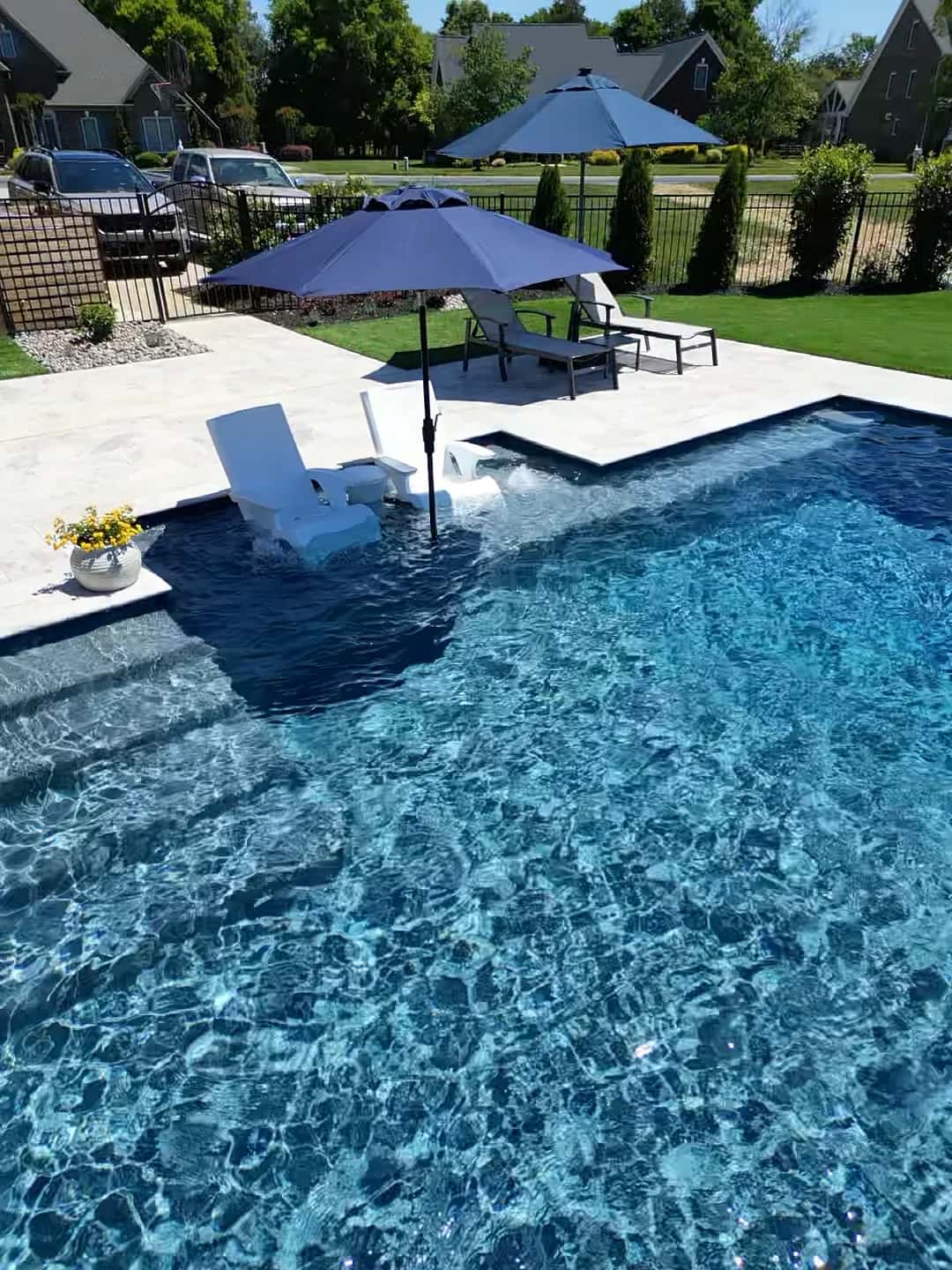
Ask what a temperature claim measured, against which comparison surface and under which conditions. Discuss shade and the route people will use in strong sun. The pool photograph below shows a light surrounding surface and a sun shelf; it does not measure deck temperature or verify a surface rating.
What joints, repairs and access look like later
Ask how the surface will be maintained and repaired before deciding. For a continuous deck, ask where planned joints will sit and how future repairs are likely to look. For a paver deck, ask whether individual units can be removed and reinstated in the specified installation, and whether matching units can be retained for future use.
Neither system removes the possibility of movement, staining or a visible repair. Ask what installation details address the site conditions and how a problem would be assessed. A warranty description should identify what it covers, who provides it and any exclusions; do not infer coverage from the material category.
Consider future access to utilities or equipment near the deck. Ask how necessary work would be reached and how the surface would be restored afterward. Keep an agreed record of the selected products, finish and care instructions. That information will be more useful later than a saved inspiration photo.
Why permeable paving requires a full design
A permeable pavement is a designed system, not simply a collection of blocks with gaps between them. North Carolina DEQ’s permeable-pavement design manual, revised November 2020, describes a surface and underlying aggregate reservoir working together to manage stormwater.
The same manual includes site investigation and maintenance criteria for the stormwater-control systems it covers. Those requirements do not mean every pool deck must be permeable. They show why a claim about permeability needs the soil, base, water route and ongoing care to be considered, with current property-specific applicability checked by the appropriate designer.
If you want permeable paving, ask what whole system is proposed and how its performance is maintained. Ask who will determine whether it is suitable for the site and whether approval is needed. The decking research guide keeps this technical context separate from general product examples.
Questions to ask about samples and installation
Take a sample conversation beyond the preferred color. Ask to see the selected surface alongside coping and the home exterior, then review the installation details, water route and care instructions. If you are comparing proposals, keep the same usable deck area and include the same steps, drains and transitions.
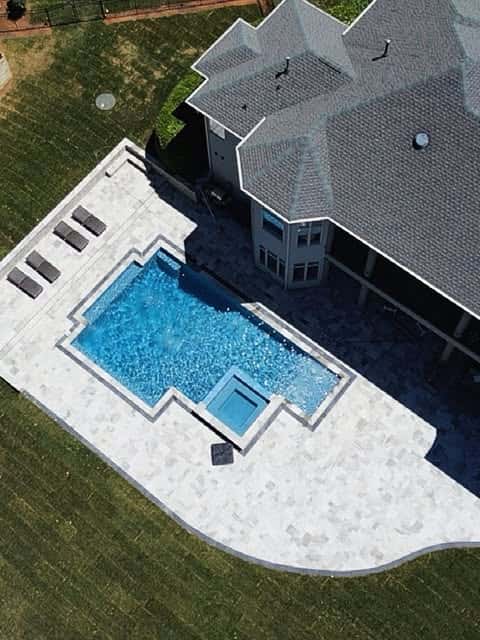
The social photograph below shows a deck surrounding a pool and spa. It is useful for discussing the amount of space around each activity, but it does not prove a material specification, a permeability rating or a measured temperature. Ask for those details in the actual proposal.
At Patriot’s Cornelius design center, discuss the pool, spa and surrounding surfaces together. Bring photos of the house, notes about rainwater and a list of the furniture or activities the deck must accommodate. A veteran-owned business offers a local place to start that conversation; the written project scope establishes what will be installed.
- What exact product or finish is in this proposal?
- What will the installer do beneath and at the edges of the surface?
- Where will water go, and which drainage work is included?
- What cleaning methods and treatments are approved?
- What is the plan for a future repair or access requirement?
WHAT HOMEOWNERS ASK
A few more useful answers.
Are pavers always more expensive than concrete?
Not enough information is supplied by the material names alone. Compare the selected finishes, area, base work, drainage, steps and access in actual proposals. This article does not quote current local installation prices.
Will all concrete crack?
A blanket statement does not help assess a proposed deck. Ask about the site, concrete and joint design, expected movement and how issues will be evaluated. Do not interpret a material choice as a guarantee against cracking.
Can I use ordinary patio pavers beside a pool?
Ask whether the selected product and installation are suitable for the intended wet poolside use. Review manufacturer guidance on texture, edges, cleaning and exposure. A patio label alone does not establish every poolside requirement.
Does sealing make a pool deck easier to care for?
That depends on the selected surface and treatment. Ask whether a sealer is recommended, what it changes, how it affects the finish and what reapplication or cleaning is required. Use the product instructions rather than a generic sealing schedule.
MAKE YOUR NEXT CONVERSATION COUNT
Compare the deck as part of the whole backyard
Share your location, preferred uses and the surfaces you are considering. Discuss decking, drainage and landscape transitions in one design conversation.
Plan your pool deck